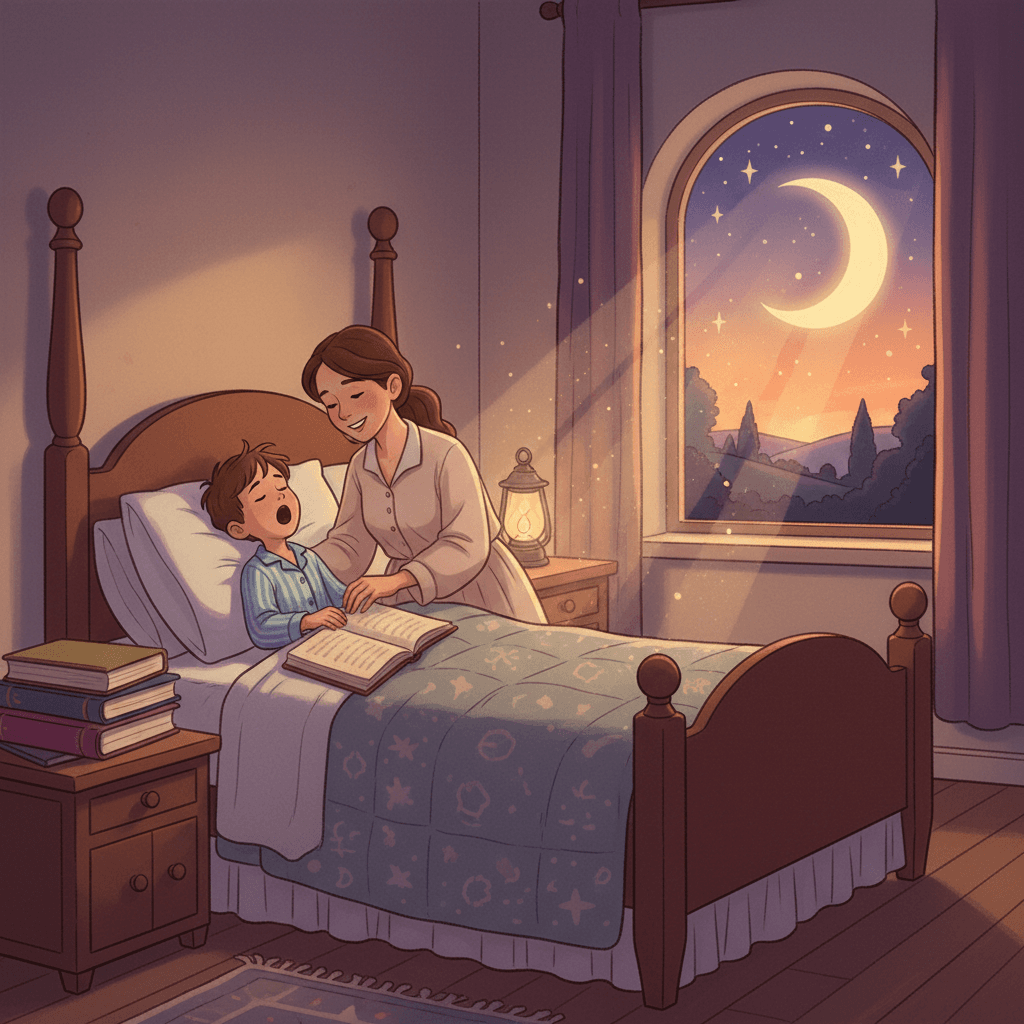
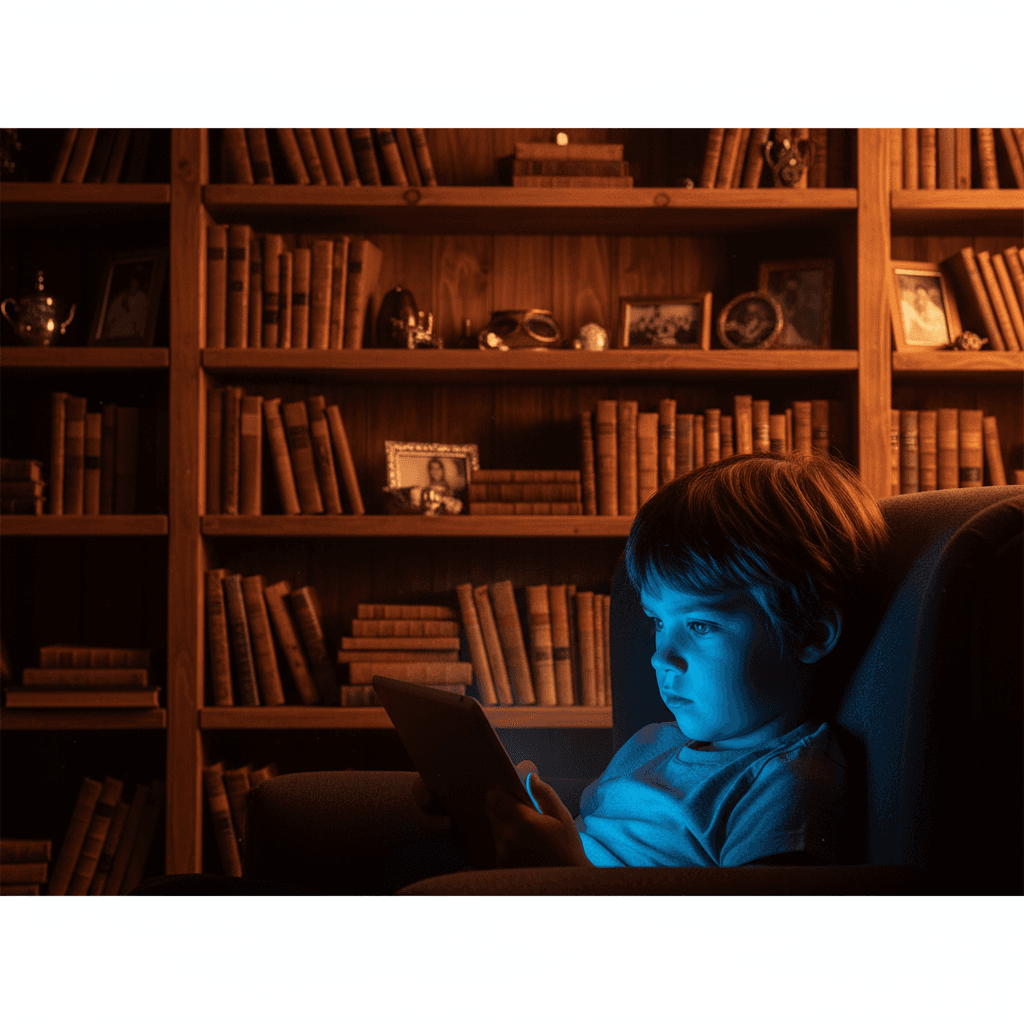
Your Child's Brain Works Harder When You Tell Stories Without Pictures
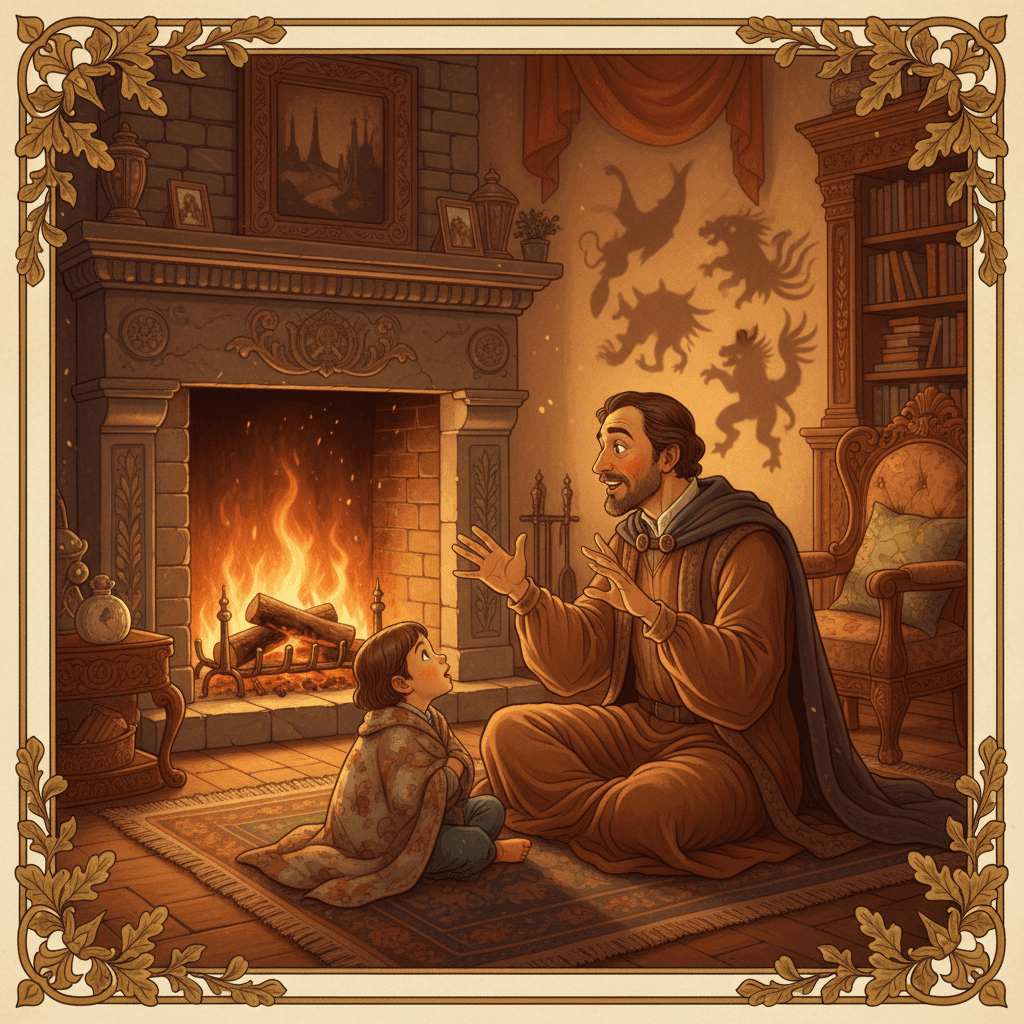
Last night at bedtime, my daughter asked me to "tell the story with no book." She wanted me to describe the dragon and the castle using only my voice. I watched her eyes dart around the ceiling, her forehead scrunched in concentration. She was building that world inside her head, brick by invisible brick.
I didn't know it then, but her brain was doing something remarkable—something that researchers in Japan recently measured and documented.
The Science: What Happens When Children Listen Without Looking
A research team led by Miyuki Yabe at Fukushima Medical University used near-infrared spectroscopy (NIRS) to measure blood flow in children's prefrontal cortex during two different activities: listening to storytelling (no pictures, no book) and traditional picture-book reading.
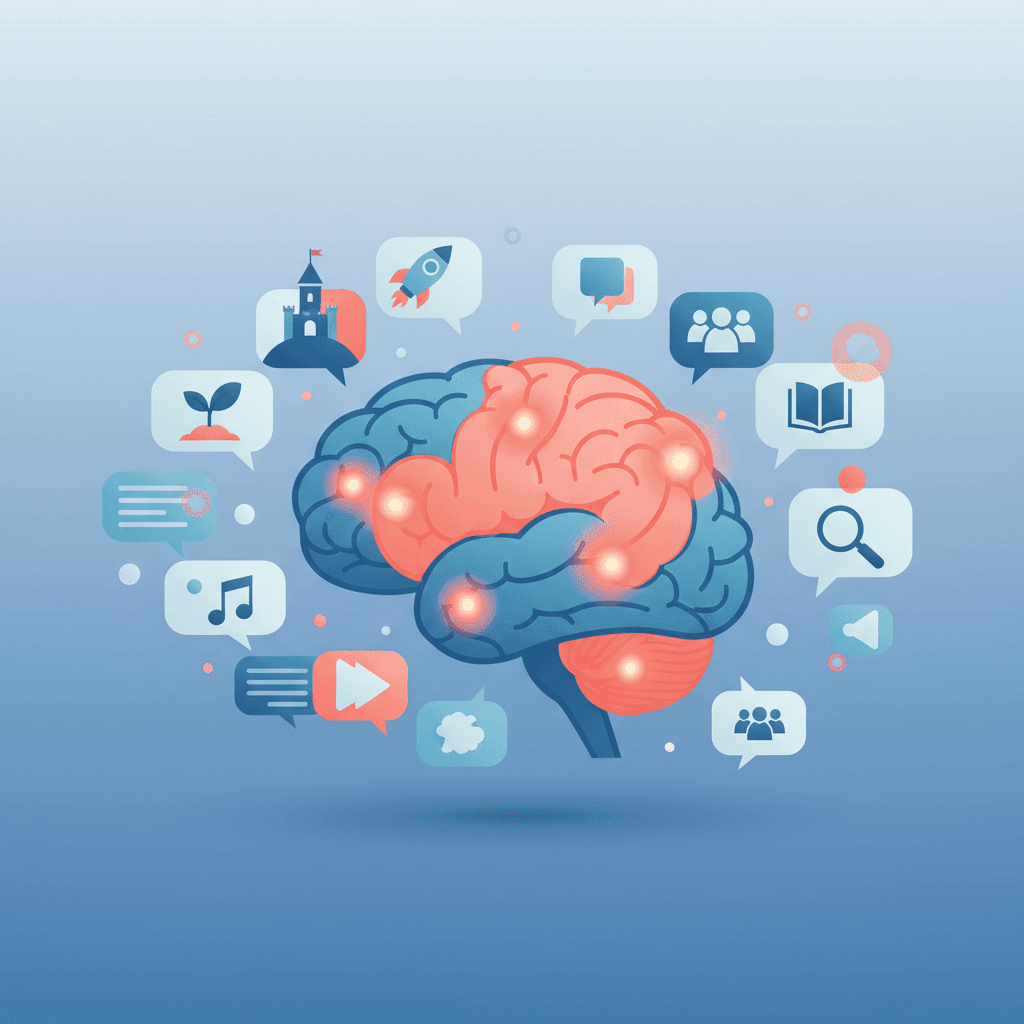
The prefrontal cortex handles executive functions—planning, imagination, working memory, and attention. When this area lights up, the brain is actively processing and constructing.
Here's what Yabe and colleagues found: During picture-book reading, blood flow in the prefrontal areas decreased significantly once children became familiar with the story. The images did the heavy lifting. The brain could relax.
But during storytelling—spoken words alone, with no visual aids—prefrontal activity remained sustained. Even after children became familiar with the story, their brains kept working. The researchers concluded this indicates "more sustained brain activation to storytelling in comparison with picture-book reading."
Without pictures to look at, children must generate the images themselves. They construct the castle. They paint the dragon's scales. They decide how tall the trees stand in the forest.
This sustained effort builds cognitive muscle.
Why Active Imagination Matters for Development
The National Storytelling Network defines storytelling as "the interactive art of using words and actions to reveal the elements and images of a story while encouraging the listener's imagination."
The key phrase: encouraging the listener's imagination.
When we hand children a picture, we give them an answer. When we describe a scene with words alone, we give them a problem to solve. Their brains must translate auditory input into visual representations, hold those images in working memory, and update them as the story progresses.
This process exercises the exact neural circuits children need for reading comprehension, creative thinking, and abstract reasoning. The Fukushima study suggests that picture-book reading, while valuable, may allow these circuits to idle—especially once the story becomes familiar.
Storytelling keeps the engine running.
The Practical Problem for Parents
Most parents don't have time to memorize stories or the confidence to invent them on the spot. Bedtime arrives after a full day of work, dinner, baths, and negotiations. Reading from a book feels manageable. Making up a story feels like one task too many.
This creates a gap between what research shows is beneficial (sustained imaginative engagement) and what's actually practical (grabbing the nearest picture book and getting through it).
The solution isn't to abandon picture books. The solution is to find storytelling that meets parents where they are.
How Petit Tales Applies This Research
Petit Tales creates personalized audio-first stories where your child is the main character. Each story is generated fresh, with your child's name, interests, and companions woven into the narrative.
There are no pictures. By design.
When your child hears their own name in a story about exploring a moonlit forest or befriending a shy creature in an underwater kingdom, they must imagine themselves there. Their prefrontal cortex does the work the Yabe study documented—constructing scenes, holding details in memory, updating the mental picture as events unfold.
Petit Tales provides the narrative structure and vocabulary-rich language. Your child's brain provides the visuals.
This approach also addresses another finding from the research: familiarization effects. The study noted that clinical reports suggest storytelling benefits become more evident as children grow accustomed to the format. Petit Tales delivers ongoing stories—continuing narratives that build familiarity with storytelling while introducing fresh content that keeps engagement high.
Each chapter ends with a prompt for your child's input. What should happen next? This transforms passive listening into active participation, further sustaining the prefrontal engagement the researchers measured.
The Compound Effect of Nightly Practice
One night of storytelling exercises your child's imagination. One hundred nights of storytelling builds it.
The children in the Fukushima study showed sustained prefrontal activation during storytelling sessions. Now imagine that activation happening every night for months. The neural pathways for visualization, narrative comprehension, and creative thinking strengthen through repetition.
Picture books have their place. They introduce art, teach page-turning, and create shared visual experiences. But they shouldn't be the only tool in your bedtime routine.
Adding storytelling—whether you make it up yourself or use a service that generates it for you—gives your child's brain a different kind of workout. A harder one. The kind that builds capacity rather than fills it.
Start Tonight
Your child's prefrontal cortex is ready to work. It wants the challenge of building mental images from words alone.
Petit Tales makes that challenge accessible. You don't need to memorize stories or invent plots after an exhausting day. You need to press play and let your child's name carry them into an adventure they construct inside their own head.
The first three chapters are free. Your child picks their companion, chooses their story world, and hears themselves as the hero—no pictures included.
Try Petit Tales tonight at www.petittales.com and give your child's imagination the exercise it craves.
References: Yabe, M., Oshima, S., Eifuku, S., Taira, M., Kobayashi, K., Yabe, H., & Niwa, S. (2018). Effects of storytelling on the childhood brain: near-infrared spectroscopic comparison with the effects of picture-book reading. Fukushima Journal of Medical Science, 64(3), 125-132.