The Science Behind Screen Time and Your Child's Brain: What fMRI Research Reveals About Reading Together
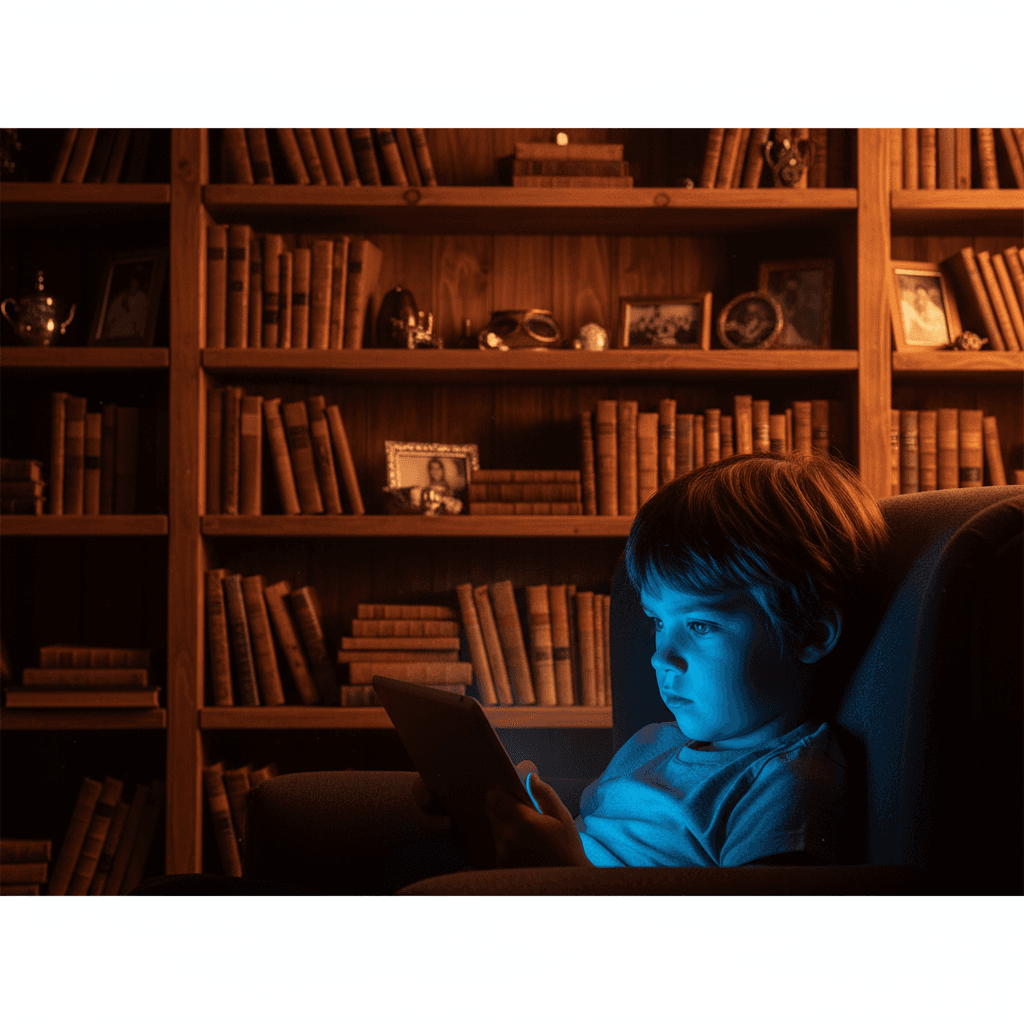
Last Tuesday at 7:43 PM, a mother in Ohio watched her four-year-old swipe through a tablet app while she finished loading the dishwasher. The app promised "educational content." The child was quiet. Everyone was calm. But inside that small skull, something measurable was happening—or rather, not happening.
Dr. John S. Hutton and his team at Cincinnati Children's Hospital have spent the last decade putting children in fMRI machines to answer a question most parents feel in their gut but struggle to articulate: Does it matter how we share stories with our kids?
The answer, backed by brain scans of hundreds of preschoolers, is unambiguous. It matters enormously.
What the Brain Scans Actually Show
In 2020, Hutton's research team published findings in JAMA Pediatrics that sent ripples through both medical and parenting communities. They examined associations between screen-based media use and brain white matter integrity in preschool-aged children. White matter forms the communication highways between brain regions—the infrastructure that allows different areas to work together.
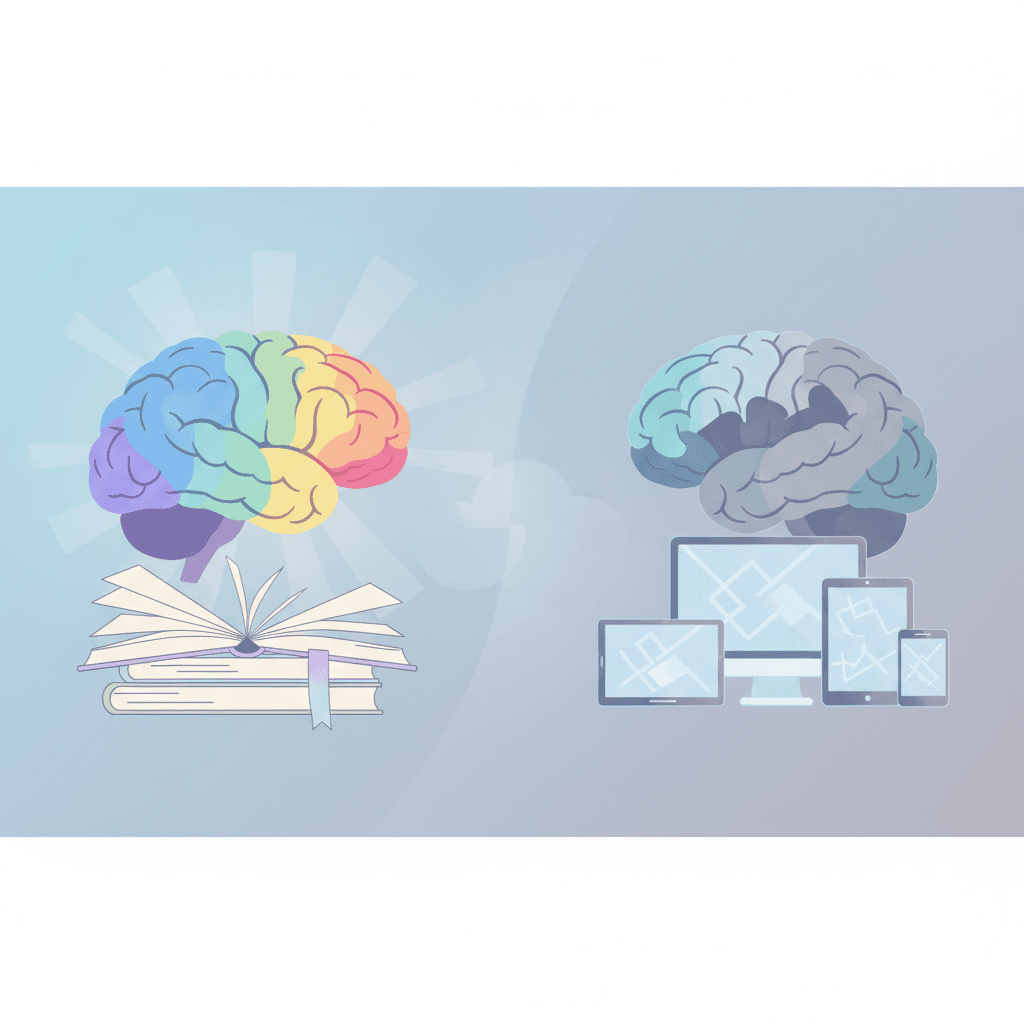
Children with higher screen exposure showed measurably lower structural integrity in white matter tracts. These weren't subtle differences requiring statistical gymnastics to detect. The scans revealed clear patterns: more screen time correlated with less developed neural wiring in areas supporting language and literacy.
A separate 2018 study by Hutton and colleague Dr. Tzipi Horowitz-Kraus found that brain connectivity in children increases with time spent reading books and decreases with screen-based media exposure. The relationship held across multiple neural networks involved in attention, language processing, and cognitive control.
Why Shared Reading Activates Different Brain Networks
Hutton's 2015 research in Pediatrics used fMRI to watch preschool brains in real time while children listened to stories. Children from homes with richer reading environments—more books, more parent-child reading time—showed significantly greater activation in brain regions that process visual imagery and narrative comprehension.
Here's the critical finding: these children's brains were doing more work during story listening, building the mental pictures and connections that form the foundation of literacy. Their neural systems for language were literally more engaged.
A follow-up study in 2017 examined "shared reading quality"—not just whether parents read to children, but how they read. Children whose parents engaged in dialogic reading (asking questions, making connections, letting the child participate) showed stronger activation in cerebellar regions associated with language processing and executive function.
The brain doesn't just passively receive stories. It constructs them. And that construction process requires practice.
The Personalization Factor: Why Generic Stories Fall Short
Perhaps the most overlooked aspect of Hutton's research involves engagement. In his 2017 PLoS One study examining child engagement during shared reading, the data pointed to a clear mechanism: engaged children showed enhanced cerebellar activation and connectivity. Disengaged children showed patterns closer to passive screen viewing.
What drives engagement? Relevance. Connection. The sense that a story belongs to the listener.
When a child hears a story featuring a character who shares their name, lives in their type of neighborhood, has their color hair, faces their specific fears—that child leans in. Attention sharpens. The brain's language networks fire more intensely because the content feels worth processing.
Generic stories require children to do extra cognitive work just to find the relevance. Personalized stories hand them that relevance from the first sentence.
How Petit Tales Applies This Science
Petit Tales was built around these research findings. Every story places the child at its center—not as a gimmick, but as a neurological strategy.
When you create a story on Petit Tales, you provide details about your child: their name, interests, fears they're working through, family members they love. The AI uses this information to generate a narrative where your child is the protagonist navigating situations that mirror their actual life.
This approach directly addresses the engagement mechanism Hutton's research identified. A child hearing about "Emma who was nervous about starting at her new school, just like you were last week" processes that story differently than a child hearing about "a girl who went to school." The personal stakes drive deeper neural engagement.
Petit Tales stories also support the dialogic reading style that Hutton's brain scans showed produces stronger activation. Each chapter naturally creates conversation opportunities: "Remember when you felt scared like that?" or "What do you think will happen next?" The personalized content gives parents and children shared reference points to discuss.
The Compound Effect of Ongoing Narratives
One feature distinguishes Petit Tales from one-off personalized books: continuity. Rather than isolated stories, children follow ongoing sagas where characters develop across multiple chapters.
This structure builds on another finding from Hutton's work: the importance of narrative comprehension networks. Children who regularly engage with extended narratives develop stronger connectivity in brain regions that track story elements over time—character motivations, plot developments, cause-and-effect relationships.
Each Petit Tales chapter incorporates feedback from the previous reading session. If your child was fascinated by the dragon character, the next chapter expands that element. If they expressed concern about a conflict, the story addresses it. The narrative responds to your child's engagement, creating a feedback loop that reinforces attention and investment.
What Parents Can Do Tonight
The research doesn't suggest screens are poison or that a single bedtime story will restructure neural architecture. Brain development responds to patterns repeated over time.
Start with fifteen minutes. Read together in a space without competing screens. Ask questions about the story. Let your child's interests guide the conversation.
If finding the right books has been the barrier—if your child loses interest in generic fairy tales or animal adventures—consider whether personalization might be the missing element.
Petit Tales offers a free trial that includes three full chapters. You can test whether seeing themselves in a story changes your child's engagement before committing to a subscription.
The brain scans don't lie. How we share stories with our children shapes the neural infrastructure they'll carry into kindergarten and beyond. The question isn't whether reading matters—Dr. Hutton's fMRI machines settled that. The question is whether we'll use what the science shows us.
Your child's bedtime story tonight is building something. Make it count.
Start your child's personalized story journey at petittales.com. The first three chapters are free.