What Happens Inside Your Child's Brain When You Read Together

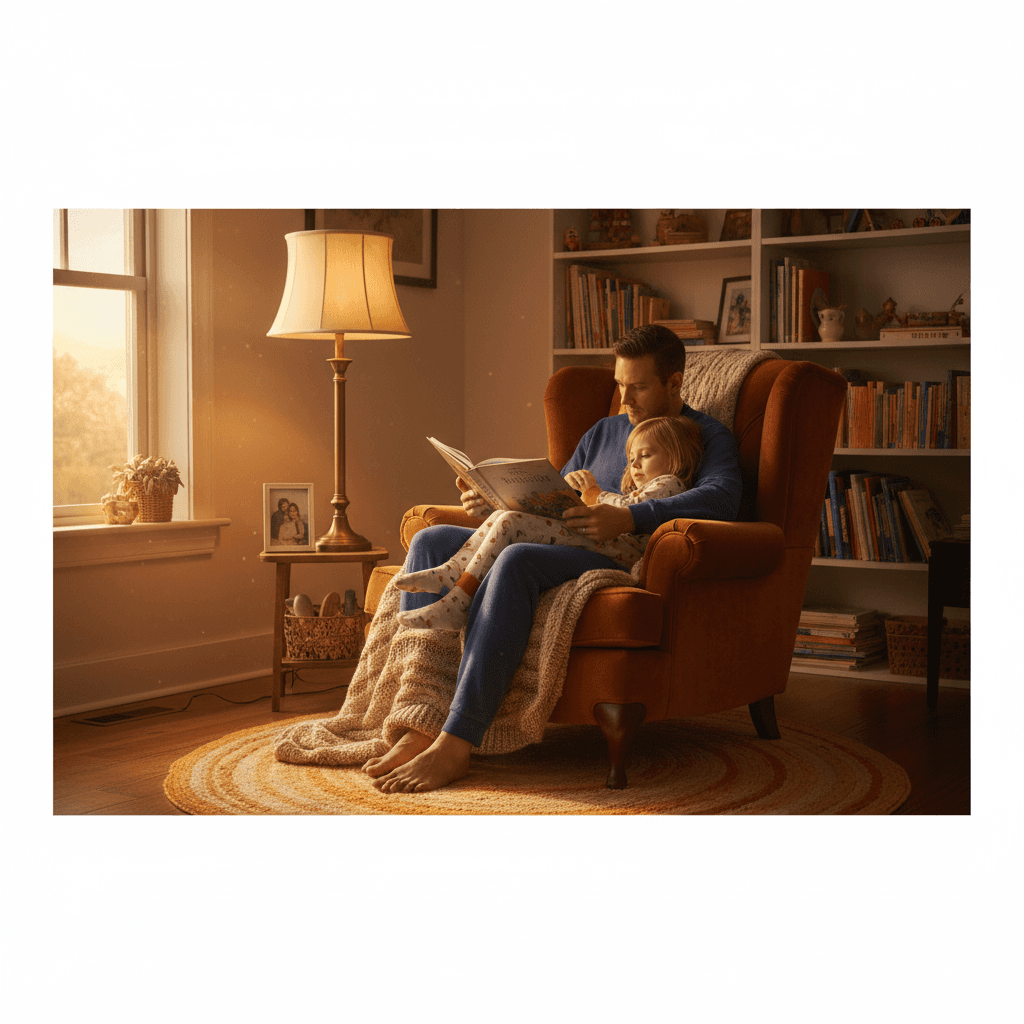
A four-year-old named Maya sits in her father's lap, eyes wide as he reads about a rabbit who plants a garden. She doesn't know it, but specific regions of her brain are firing in patterns that will shape how she reads, writes, and thinks for years to come.
We can now see this happening. In 2015, researchers at Cincinnati Children's Hospital placed preschoolers inside an fMRI machine, played them stories through headphones, and watched their brains light up. What they found changed how we understand the connection between reading at home and a child's developing mind.
The Study That Let Us Watch Children's Brains Process Stories
Dr. John Hutton and his team at Cincinnati Children's Hospital recruited 19 children between ages 3 and 5 for a study published in Pediatrics. These weren't children with reading difficulties or developmental concerns—they were typical preschoolers from the Cincinnati area.
The researchers did something that hadn't been done before: they combined fMRI brain imaging with detailed assessments of each child's home reading environment. Parents answered questions about how often they read to their children, how many books were in the home, and the variety of reading activities they engaged in together.
Then, while the children lay still in the scanner (no small feat for a preschooler), they listened to age-appropriate stories through headphones. The fMRI tracked blood flow in their brains, revealing which neural regions activated during story comprehension.
The Brain Regions That Lit Up—And Why It Matters
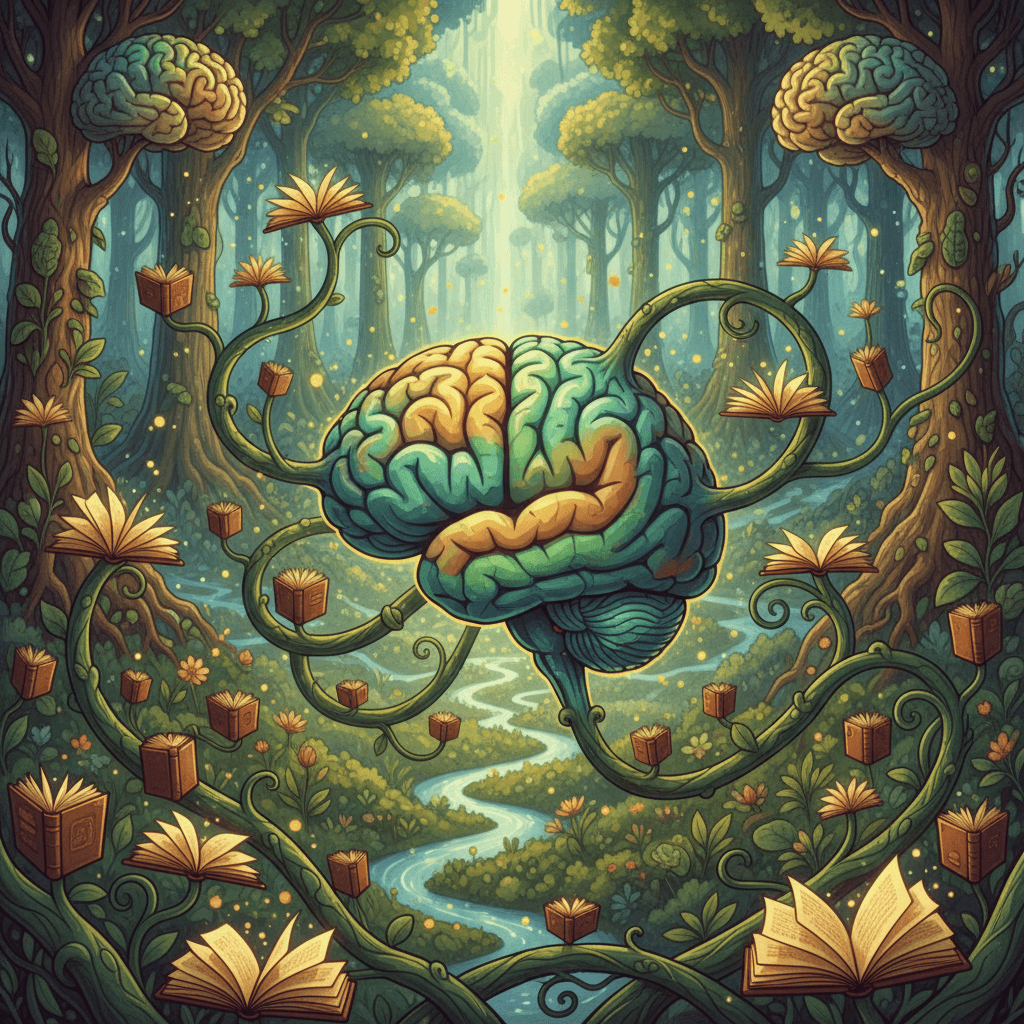
Children who came from homes with stronger reading environments showed significantly higher activation in a region called the left parietal-temporal-occipital association cortex. This is the part of the brain that handles semantic processing—the extraction of meaning from language.
Here's what that means in practical terms: these children weren't just hearing words. Their brains were working harder to understand them, to connect them to mental images, to build meaning from sound.
The researchers also found activation in regions associated with visual imagery and narrative comprehension. Children from reading-rich homes appeared to be "seeing" the stories in their minds more vividly while listening.
Dr. Hutton's team noted that this pattern of activation supports what developmental psychologists have long suspected: reading aloud to children doesn't just teach vocabulary. It trains the brain to process language in ways that prepare children for independent reading later.
Why Engagement Is the Missing Variable
The Hutton study measured home reading environment—but within that measurement lay an important detail. The assessment tool they used (the StimQ-P) didn't just count books or minutes read. It evaluated the quality of reading interactions: whether parents pointed at pictures, asked questions, and connected stories to the child's own life.
This matters because passive exposure to words isn't enough. The children whose brains showed the strongest activation came from homes where reading was interactive, where stories connected to their world, where they were participants rather than passive listeners.
A child who hears a generic story about "a boy" processes it differently than a child who hears a story about someone like them, doing things they might do, facing problems they understand.
How Personalized Stories Activate the Brain Differently
When a story features a child's name, their pet, their favorite color, or their recent experiences, something shifts in how they engage. Their brain recognizes the material as relevant. Attention increases. Emotional investment follows.
This isn't speculation—it's a direct application of the semantic processing findings from Hutton's research. When content is meaningful and personally relevant, the brain regions responsible for extracting meaning work harder. The parietal-temporal-occipital cortex that lit up in those Cincinnati preschoolers responds to relevance.
Generic stories about unfamiliar characters in unfamiliar settings still provide value. But personalized narratives that incorporate a child's world create the conditions for deeper processing.
Petit Tales Applies This Science to Bedtime
Petit Tales creates AI-generated bedtime stories that place your child at the center of the narrative. When you set up a profile, you provide your child's name, interests, and life details. Every story generated puts them into adventures that reflect their world.
The platform builds ongoing narratives where characters develop across chapters. A child who loves dinosaurs meets a dinosaur friend who appears again and again, growing alongside them. A child who just started preschool hears stories that validate those experiences.
This approach directly addresses what the Hutton study revealed: engagement drives brain activation, and relevance drives engagement.
The Bedtime Reading Challenge Most Parents Face
You want to read to your children every night. The research makes clear that you should. But after a long day, finding a book that captures their attention—again—feels difficult. You've read Goodnight Moon four hundred times. Your child wants the same story, but you can barely stay awake through it.
Personalized, ongoing stories solve this problem from both sides. Your child stays engaged because the story is about them and continues from where it left off. You stay engaged because you're hearing something new, watching a narrative unfold that reflects your actual child.
The Hutton research showed that home reading environment predicted brain activation patterns. But maintaining a strong reading environment requires stories worth reading—for both of you.
Starting the Habit That Shapes Their Brain
The children in Hutton's study were 3 to 5 years old. Their brains were already showing the effects of their reading environments. The patterns being laid down during those preschool years create the foundation for how children will approach reading, learning, and language for the rest of their lives.
This isn't a window that stays open indefinitely. The neural pathways being formed during early childhood become the infrastructure for everything that follows. Reading together now shapes how your child's brain processes stories, extracts meaning, and builds comprehension skills.
Petit Tales offers a free tier so you can start tonight. Three chapters, no credit card required. Your child becomes the hero of a story built around their interests, and you get to watch their eyes light up when they hear their name in an adventure.
The fMRI machines at Cincinnati Children's Hospital showed us what happens inside a child's brain during story time. Now you can put that science to work at bedtime.
Start your child's first personalized story at Petit Tales
References: Hutton JS, Horowitz-Kraus T, Mendelsohn AL, DeWitt T, Holland SK; C-MIND Authorship Consortium. Home Reading Environment and Brain Activation in Preschool Children Listening to Stories. Pediatrics. 2015;136(3):466-478. doi:10.1542/peds.2015-0359