What Happens in Your Child's Brain When You Read Together: New fMRI Research Reveals the Answer
Your three-year-old wiggles in your lap, pointing at the dog on page four for the sixth time. You're tired. The dishes are piling up. And somewhere in the back of your mind, you wonder if this nightly ritual actually makes a difference—or if it's just something parents are supposed to do.
Dr. John Hutton wondered the same thing. So he put children in an fMRI machine and watched what happened to their brains while they listened to stories.
The results changed everything we thought we knew about bedtime reading.
The Study That Made Brain Activity Visible
In 2015, Dr. Hutton and his team at the University of Cincinnati conducted one of the first studies to measure brain activation in preschoolers during story listening. Using blood oxygen level dependent functional MRI (BOLD fMRI), researchers tracked neural activity in 19 children ages 3-5 while they listened to age-appropriate narratives.
The key variable: how much reading exposure each child received at home.
Researchers measured home reading environment using the validated StimQ-P assessment, which captures factors like how often parents read aloud, the number of books in the home, and the quality of reading interactions.
What the Brain Scans Revealed
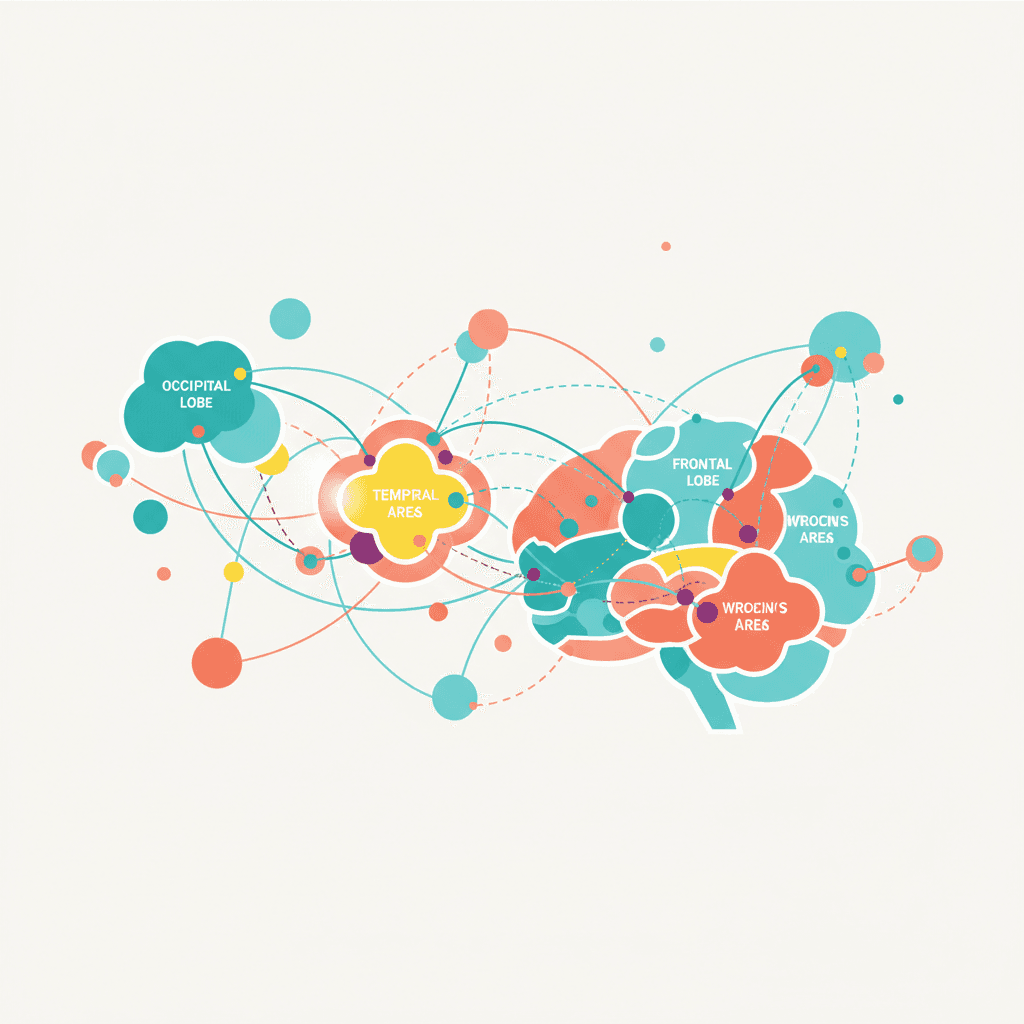
Children from homes with higher reading exposure showed significantly stronger activation in a specific region: the left-sided parietal-temporal-occipital association cortex.
This region handles two critical functions:
Mental imagery — the ability to picture scenes, characters, and actions described in words.
Semantic processing — extracting meaning from language.
These aren't minor cognitive functions. They form the foundation of the mature reading network that develops later in childhood. When a child's brain lights up in these areas during story time, it's building the neural architecture for future literacy.
The correlation remained significant even after controlling for household income—meaning the reading environment itself, not just socioeconomic factors, drove the difference.
Why Mental Imagery Matters More Than You Think
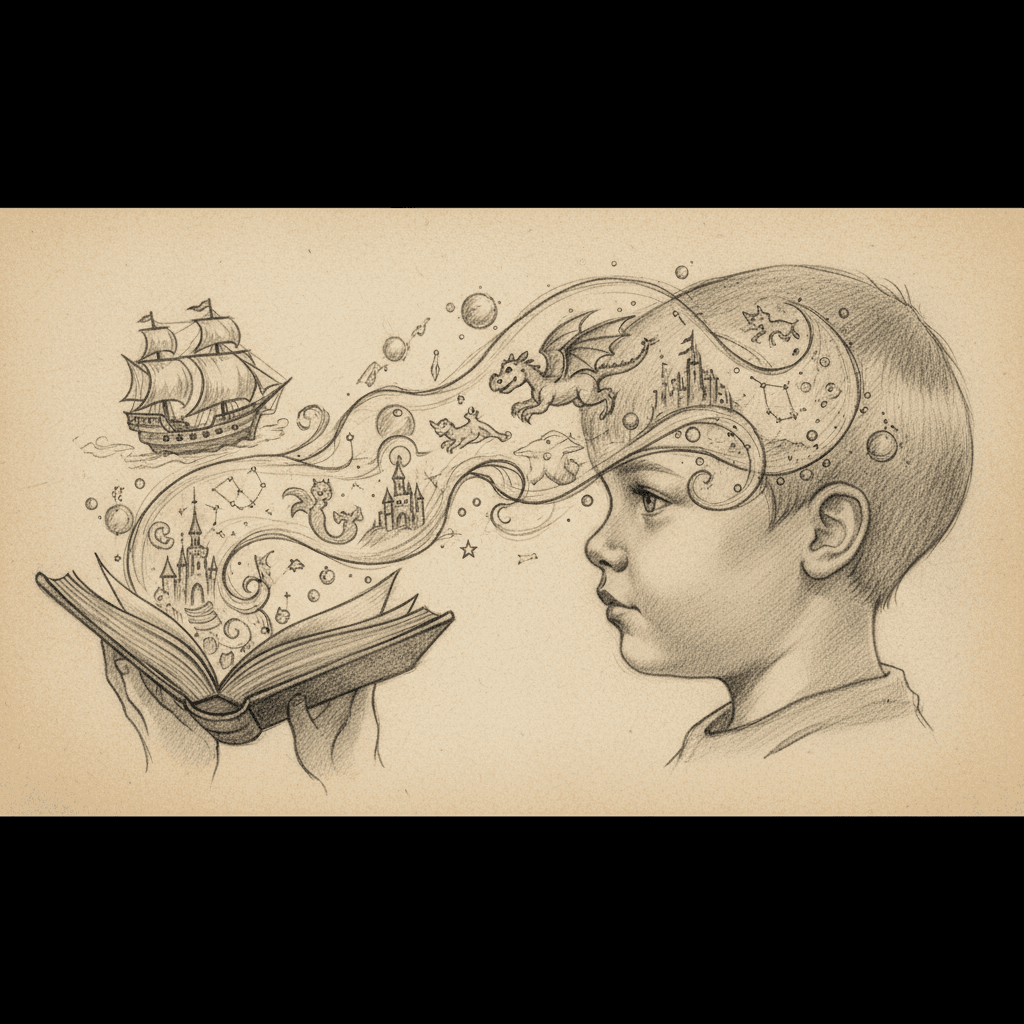
When your child hears "the bear climbed the tall tree," their brain must translate those words into a visual scene. This translation process—words to pictures—exercises the same neural pathways they'll use to comprehend written text years later.
Children who struggle with reading comprehension often struggle with mental imagery. They can decode words but can't construct meaning. The process starts long before they read a single word themselves.
Dr. Hutton's research suggests that consistent story exposure during preschool years literally shapes the brain structures responsible for this word-to-picture conversion.
The Engagement Problem
Here's what the research doesn't solve: getting a squirmy preschooler to actually engage with a story.
Every parent knows the difference between passive listening and active attention. A child who's truly engaged asks questions, points at pictures, predicts what happens next. A child who's checked out is just waiting for it to end.
The brain activation Hutton measured requires engagement. A child must actively process the narrative—build the mental images, track the characters, follow the plot—to activate those critical neural regions.
This is where story selection becomes crucial. Generic stories with interchangeable characters give the brain less to work with. Stories that feature familiar elements—a child's own name, their pet, their favorite places—provide richer material for neural processing.
How Petit Tales Applies This Research
Petit Tales creates personalized bedtime stories where your child is the main character. The platform asks about your child's interests, companions (real or imaginary), and experiences, then generates ongoing narratives that evolve based on your feedback.
This personalization directly supports the brain activation Hutton's research identified. When Emma hears about Emma's adventures with her stuffed elephant in the forest behind her house, her brain has concrete, familiar material to construct mental imagery. The semantic processing load increases because the story elements carry personal meaning.
The narrative continuity matters too. Petit Tales creates story "sagas" that continue across multiple chapters, building on previous events. This ongoing structure trains children to track plot threads and remember character details—exactly the comprehension skills that predict later reading success.
What This Means for Your Bedtime Routine
Dr. Hutton's findings carry a specific implication: the reading environment you create now shapes brain development in measurable ways. The effect isn't theoretical or eventual. It's happening during each reading session.
Three factors maximize the benefit:
Consistency — Regular reading exposure creates cumulative neural effects.
Engagement — Active participation (questions, predictions, connections to real life) increases brain activation.
Relevance — Stories that connect to a child's actual experiences provide richer material for mental imagery.
The dishes can wait. The neural window for emergent literacy development cannot.
Start Building Your Child's Reading Brain Tonight
Petit Tales offers a free tier so you can experience personalized storytelling immediately. Create a story featuring your child as the protagonist, watch their engagement change, and begin building the neural foundation for lifelong reading comprehension.
Start your child's first personalized story at petittales.com
References: Hutton, J. S. (2015). Home Reading Environment and Brain Activation in Preschool Children Listening to Stories. Master's thesis, University of Cincinnati. OhioLINK Electronic Theses and Dissertations Center.