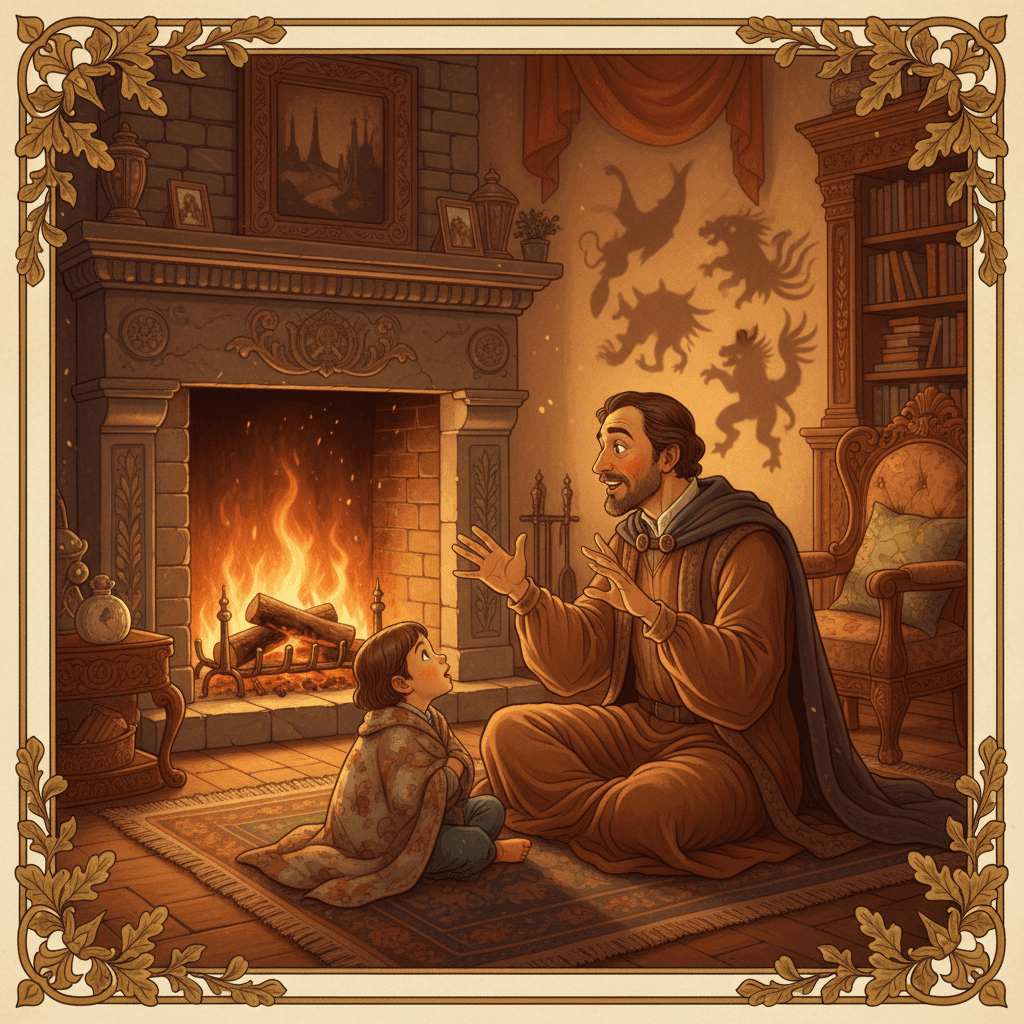
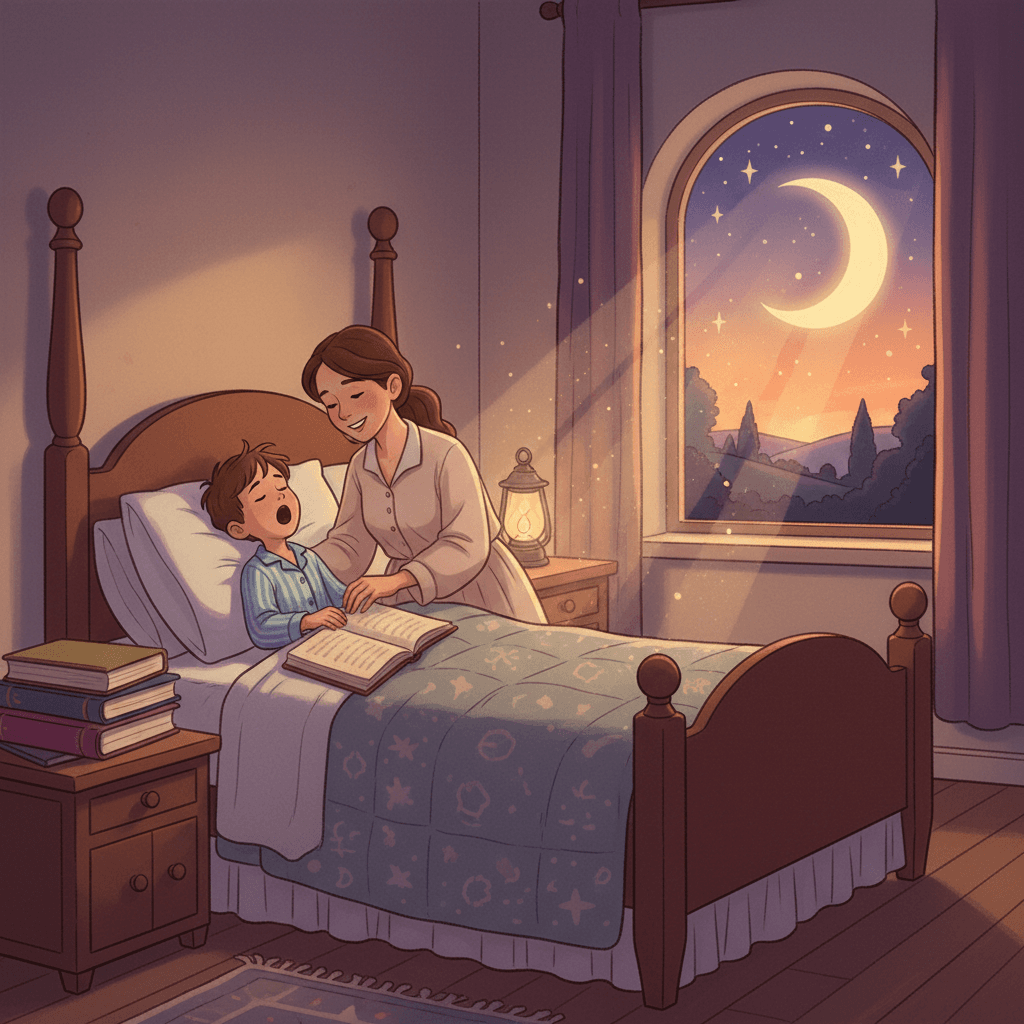
The Sleep-Literacy Connection: How Bedtime Reading Builds Better Brains and Better Sleepers

Your four-year-old is fighting sleep again. She's asked for water three times, rearranged her stuffed animals twice, and discovered an urgent need to tell you about something that happened at preschool six hours ago. Meanwhile, you're standing in the doorway, patience thinning, wondering if bedtime will ever feel easy.
Here's what the research says: children with a consistent reading routine are less likely to resist bedtime. That nightly story isn't just a pleasant tradition—it's a neurological cue that tells your child's brain to transition from the chaos of the day into rest.
What the Research Actually Shows
Dr. Leora Mogilner, associate professor of pediatrics at Icahn School of Medicine at Mount Sinai and director of Reach Out and Read, has spent her career studying the intersection of literacy and child development. Her findings are clear: "Establishing a bedtime routine that includes reading books and telling stories is a wonderful way to promote parent-child bonding while helping develop children's literacy, language, and social-emotional skills."
The data backs this up across multiple domains:
Sleep quality improves measurably. Research on preschoolers demonstrates that a bedtime story helps children sleep longer and more soundly. The mechanism is straightforward—reading provides a screen-free wind-down that doesn't suppress melatonin the way devices do.
Literacy gains compound over time. A landmark study presented at the 2017 Pediatric Academic Societies Meeting tracked children from infancy through kindergarten. The result: reading to babies created measurable advantages in vocabulary and reading skills four years later. The early investment pays dividends.
Brain development accelerates. A 2015 study published in Pediatrics used brain imaging to show that reading during the preschool years activates regions responsible for mental imagery and narrative comprehension. These aren't abstract benefits—they're observable changes in how a child's brain processes language and builds understanding.
Why Engagement Matters More Than Page Count
Dr. Mogilner emphasizes that the quality of the reading experience shapes outcomes. Pointing to pictures, discussing the story, asking questions about what might happen next—these interactions form what researchers call "safe, stable, nurturing relationships" that anchor a child's social-emotional development.
But here's where many parents hit a wall: after a long day, mustering the energy for an engaging, interactive reading session feels impossible. Generic stories don't hold a child's attention. The same book for the thirtieth time loses its magic for everyone involved.
Children need stories that speak directly to their interests, their experiences, their sense of themselves in the world. When a child recognizes themselves in a narrative, engagement skyrockets—and with it, all the cognitive and emotional benefits that Dr. Mogilner's research documents.
How Petit Tales Applies This Science

Petit Tales creates personalized bedtime stories where your child is the main character. This isn't a superficial name-swap in a template. The AI generates original narratives based on your child's interests, personality traits, and the themes you want to reinforce.
The platform addresses the core finding from the research: engagement drives outcomes. When children see themselves in a story, they pay closer attention. They ask more questions. They want to discuss what happens next. The reading session becomes the kind of rich, interactive experience that Dr. Mogilner identifies as foundational for development.
Petit Tales provides ongoing narratives that continue night after night. Each chapter builds on the previous one, creating anticipation that makes bedtime something children look forward to rather than resist. The story evolves based on feedback—if your child loved the dragon in chapter two, expect that dragon to return.
For families with multiple children, the family plan generates unique stories for each child, each one centered on that specific child's world.
The Practical Reality for Busy Parents
Speech-language therapist Sydney Bassard notes that pointing out pictures, discussing differences between words and images, and talking through the story are what build print knowledge and oral language skills. These are the foundations that predict reading success in school.
Petit Tales stories are designed for this kind of interaction. Each chapter includes natural pause points for discussion. The personalized elements give you built-in conversation starters: "Look, the character is visiting grandma's house just like you did last weekend!"
The platform handles the creative work so you can focus on the connection. No more scrambling to find a new book or rereading something your child has already memorized. Fresh content arrives in your inbox, ready for that night's routine.
Start Tonight
The research is unambiguous: bedtime reading builds literacy, strengthens bonds, improves sleep, and supports healthy brain development. The earlier you establish the routine, the greater the compounding benefits.
Your child's personalized story is waiting. Start your free trial at Petit Tales and see how a story built around your child changes bedtime from a battle into the best part of the day.