The Million Word Gap: How Reading Aloud Shapes Your Child's Brain Before Kindergarten
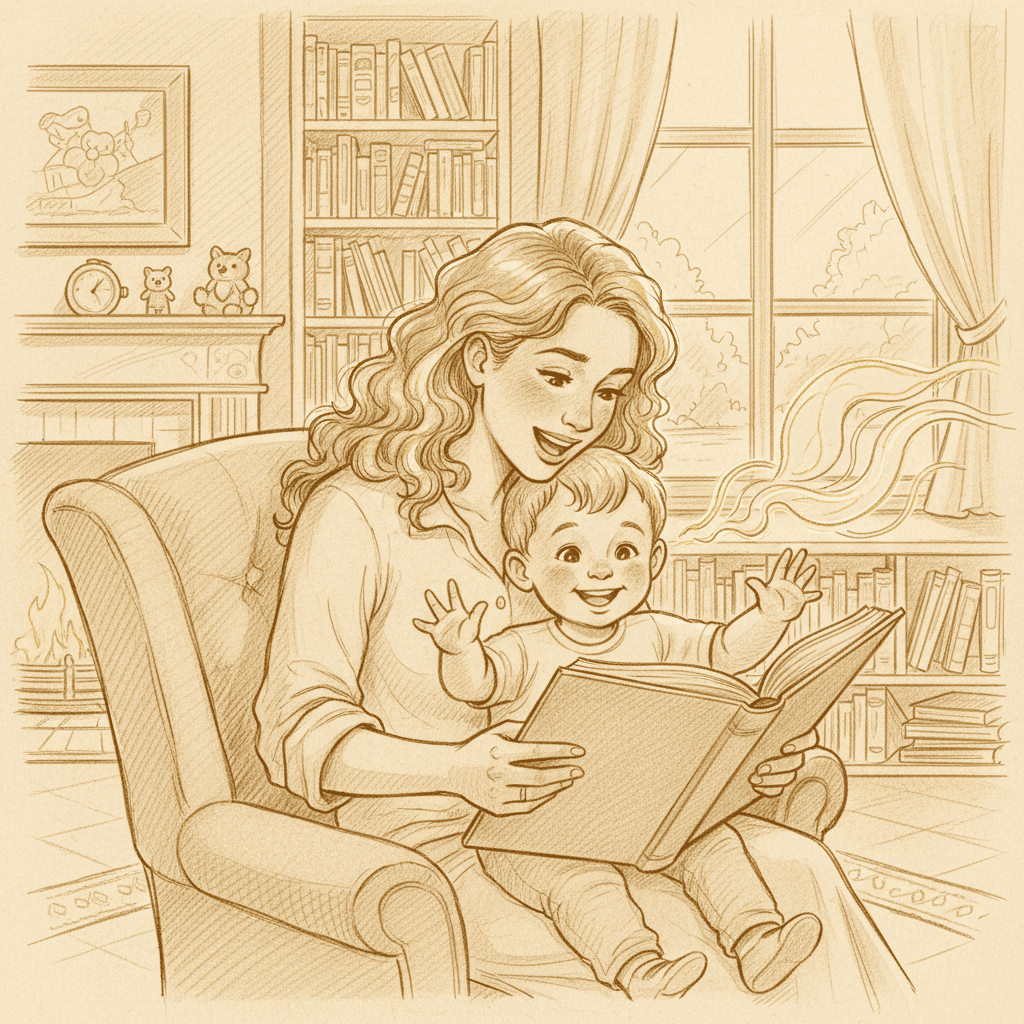
Your toddler squirms in your lap, grabbing at the pages before you can finish the sentence. You're exhausted. The dishes are piling up. And somewhere in the back of your mind, a voice whispers: Does this even matter?
Here's your answer: 1.4 million words.
That's the vocabulary gap between children who are read five books a day and those who never experience storytime at home. By the time they walk into their first classroom, some kids have heard over a million more words than their peers—and researchers at Ohio State University say this gap may determine how quickly children learn to read.
What the Research Reveals
Dr. Jessica Logan, assistant professor of educational studies at Ohio State's Crane Center for Early Childhood Research and Policy, led a study that quantified exactly what children gain—or miss—from daily reading.
Her team analyzed the 100 most popular children's books from the Columbus Metropolitan Library, counting words across board books (averaging 140 words) and picture books (averaging 228 words). They then calculated cumulative word exposure from birth to age five across different reading frequencies.
The numbers are stark:
- Never read to: 4,662 words heard
- Read to 1-2 times weekly: 63,570 words
- Read to 3-5 times weekly: 169,520 words
- Read to daily: 296,660 words
- Five books daily: 1,483,300 words
The difference between never and daily? Nearly 300,000 words. The difference between never and five books a day? Over 1.4 million.
Why Book Words Matter More Than Conversation
You might think: I talk to my child constantly. Doesn't that count?
Logan's research distinguishes between conversational vocabulary and literary vocabulary. The words children encounter in books differ fundamentally from everyday speech.
"The words kids hear in books are going to be much more complex, difficult words than they hear just talking to their parents and others in the home," Logan explained.
A conversation about dinner covers forks, plates, and chicken nuggets. A picture book might introduce penguins, Antarctica, and migration. These concepts rarely surface in daily routines—but they build the mental scaffolding children need when they encounter unfamiliar words in print.
When a child sees "penguin" in a first-grade reader, the word clicks into place. They've heard it before. They know what it means. They move forward. The child who hasn't heard that word must stop, decode, and struggle—while falling further behind with every unfamiliar term.
The Uncomfortable Truth About Reading Habits
Logan's earlier research revealed a troubling pattern: roughly one-quarter of parents in a national sample reported never reading to their children. Another quarter read to their kids only once or twice per week.
That means half of American children enter the education system with a significant vocabulary deficit—not because their parents don't care, but because modern life makes consistent reading difficult.
Parents work long hours. Schedules fragment. Screens offer easier entertainment. And when exhaustion hits at 7 PM, pulling out a book feels like one demand too many.
But the research doesn't lie. Those nightly fifteen minutes compound. Word by word, story by story, a child's reading future takes shape—or doesn't.
What Children Actually Need From Stories
The million word gap research points to a specific requirement: children need repeated exposure to complex, age-appropriate vocabulary delivered through engaging narratives.
This isn't about drilling flashcards or forcing educational content. Logan's study focused on the most popular, most-circulated children's books—stories kids actually wanted to hear again and again.
The key factors that drive vocabulary acquisition:
Consistency beats intensity. Reading one book daily produces better outcomes than sporadic marathon sessions. The 296,660-word advantage comes from showing up every single day.
Engagement drives retention. Children absorb words they encounter in stories that hold their attention. A bored child tunes out. An invested child leans in, asks questions, and requests the same book for the fourteenth time.
Personalization increases attention. Research consistently shows that children engage more deeply with content that reflects their interests, their world, and their identity.
Building a Million-Word Foundation With Petit Tales
Petit Tales creates personalized bedtime stories where your child becomes the main character—facing adventures tailored to their interests, their name, and their world.
This personalization serves a specific purpose beyond novelty. When children see themselves in a story, they pay closer attention. When they pay closer attention, they absorb more vocabulary. When they absorb more vocabulary, they build the foundation Logan's research describes.
Each Petit Tales story continues from the previous chapter, creating an ongoing narrative that children want to return to night after night. This continuity solves one of the central challenges parents face: getting kids to want storytime rather than resist it.
The platform generates rich, age-appropriate language across varied settings and situations—exactly the kind of complex vocabulary that separates book words from everyday conversation. One night your child might encounter a "crystalline cave." The next, a "thundering waterfall." Words they'll recognize when they appear in classroom books years later.
Closing the Gap Starts Tonight
Dr. Logan's research offers parents a rare gift: a clear, actionable path forward. The million word gap isn't mysterious or complicated. It closes one story at a time.
Every book you read adds to your child's word bank. Every night you show up builds the neural pathways that make reading feel natural rather than laborious. Every story where your child sees themselves as the hero teaches them that books are for them.
The children entering kindergarten with 1.4 million extra words didn't get there through genius or privilege. They got there because someone read to them. Consistently. Engagingly. Every single day.
Your child's reading future is being written right now, in the fifteen minutes before bedtime.
Start your child's personalized story journey with Petit Tales. Create your free account and watch what happens when your child becomes the hero of their own adventure—one million words at a time.
Reference: Logan, J., Justice, L., Chaparro-Moreno, L.J., & Yumuş, M. (2019). "When Children Are Not Read to at Home: The Million Word Gap." Journal of Developmental and Behavioral Pediatrics.